
Lighting a Restaurant or Bar: Planning the Layers Guests Actually Feel
Guests rarely notice restaurant lighting when it is right. They notice that the room feels warm, that food looks appetizing, that faces look good across the table, and that the bar seems to glow. They definitely notice when it is wrong: harsh glare, dark corners, flat light that makes an expensive room feel like an office, or a dining room that never changes mood from lunch to late night.
Lighting is one of the most powerful and most underplanned parts of a restaurant or bar build-out. It is often treated as a list of fixtures chosen near the end of design. In reality, lighting is a system that touches architecture, millwork, electrical, controls, energy code, and operations, and it works best when it is planned early.
Think in Layers
Good hospitality lighting is built from several layers that work together:
- Ambient light sets the overall brightness of the room so guests and staff can move comfortably.
- Task light serves specific work: bar stations, host stands, pass windows, and the kitchen line.
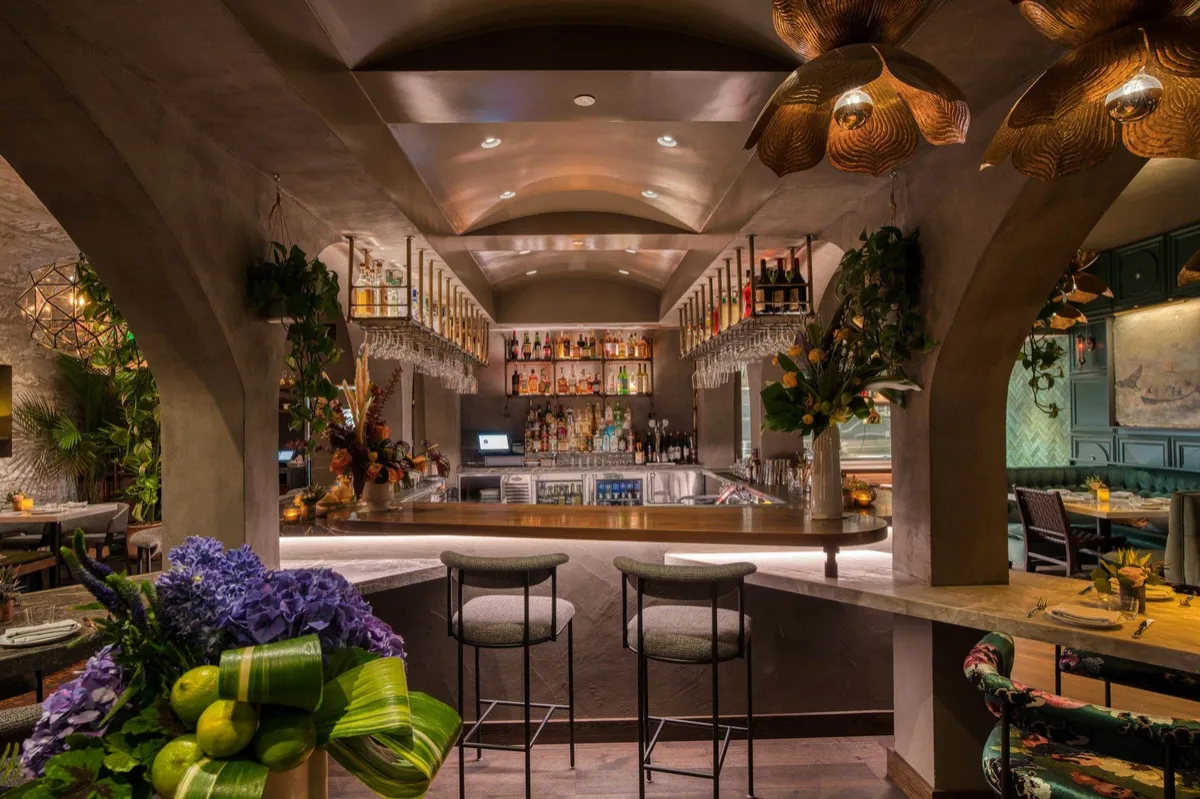
- Accent light draws attention to features such as the back bar, artwork, textured walls, plants, or architectural details.
- Decorative light includes pendants, sconces, and statement fixtures that contribute to the identity of the space as much as the light they produce.
A room that relies on one layer usually feels flat. A room that balances several can feel bright enough to read a menu yet still intimate.
Light the Table, Not Just the Room
In a dining room, the table is the stage. Light focused on the table makes food look its best and creates a pool of warmth around each party, while the surrounding space can stay softer. This often means planning fixture locations around the furniture plan, which is one reason lighting should be coordinated before the seating layout is final. If tables move after ceilings are closed, focused light may end up landing in the aisle.
Faces matter too. Light coming straight down from above can cast shadows under eyes. Softer light from sconces, pendants, or reflected surfaces helps guests look good to each other, which is a big part of how a room feels.
Make the Bar Glow
The bar is often the visual center of a restaurant, and the back bar is where lighting can do the most. Lighting integrated into shelving can make bottles glow and create depth behind the bartenders. Under-counter lighting along the bar front can make the bar feel like it floats. Task lighting over stations needs to be bright enough for accurate pours without spilling glare into guests' eyes.
This is where custom millwork and lighting have to be designed together. Channels, diffusers, drivers, and access for maintenance need to be built into the shelving and bar die, not added afterward.
Color Temperature and Color Quality
Two specifications quietly shape how a space feels:
- Color temperature describes how warm or cool light appears. Warmer light, often in the 2700K range or lower for evening venues, tends to feel more relaxed and flattering. Cooler light can suit a daytime café or a kitchen work area.
- Color rendering describes how accurately light shows colors. High color rendering helps food, finishes, and skin tones look natural. Low quality fixtures can make even beautiful materials look dull.
Mixing color temperatures without intent is a common mistake. When a warm pendant sits next to a cool downlight, the room looks unfinished. Consistency across fixtures, or intentional contrast, makes the difference.
Plan for Dimming and Scenes
Most restaurants and bars change character during the day. A space that serves lunch, happy hour, and a late dinner needs lighting that can shift with it. Dimmable fixtures and a control system with preset scenes let staff change the mood with a button instead of adjusting individual switches. Compatibility between fixtures, drivers, and dimmers should be confirmed during design to avoid flicker or uneven dimming.
California's energy code also sets requirements for lighting power and controls in commercial spaces. Planning the control strategy early helps meet those requirements without compromising the design.
Do Not Forget the Back of House and the Exterior
Kitchens, prep areas, dish, and storage need bright, even, cleanable lighting that supports food safety and efficient work. Patios, entries, and signage need lighting that draws guests in, keeps paths safe, and stands up to weather. In coastal San Diego, exterior fixtures should be selected for salt air and moisture.
Outdoor dining spaces deserve the same layered approach as indoor rooms. String lights alone rarely create a complete experience. Combining them with low-level path lighting, uplighting on plants or walls, and lighting at bars and service stations makes a patio usable and inviting after sunset.
Coordinate Lighting With Everything Else
Lighting connects to ceiling design, structure, HVAC diffusers, sprinkler heads, speakers, millwork, and furniture. When those trades are coordinated early, fixtures land where they belong and ceilings look clean. When they are not, the field crew ends up making compromises that guests will see every night.
Equity Builders brings design, fabrication, and construction together for restaurants, bars, and hospitality spaces across San Diego, from The Whaling Bar at La Valencia Hotel to The Beverly Beach Garden in Pacific Beach. Visualizing a space with 3D rendering and VR before construction can help owners understand how lighting, materials, and layout will feel together.
If you are planning a restaurant build-out or bar renovation, talk with our team about bringing lighting into the conversation from the start.
